
7 Best Traditional Brass Lamps for Home Pooja: Types, Uses & Buying Guide
Magizh HandicraftsPublished: November 17, 202613 min read
Compare seven traditional brass lamps for home pooja, including Kuthu, Kamakshi, Gajalakshmi, Pavai, Peacock, Hanging and Ashtalakshmi Vilakku. Learn which designs suit everyday worship, compact pooja spaces, festivals and traditional gifting. The guide also covers how to choose the right size, check stability, place an oil lamp safely and care for different brass finishes.
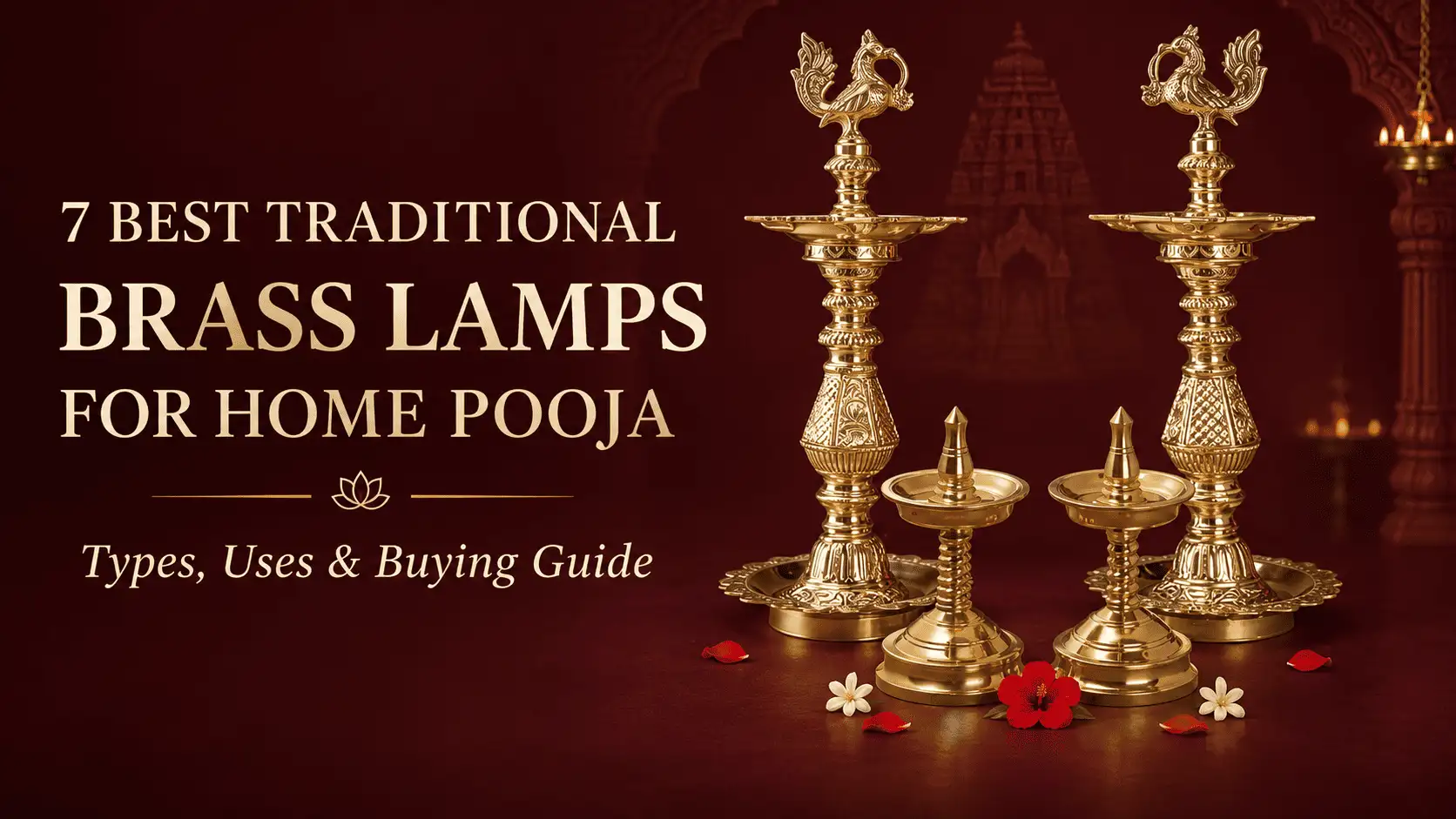
The lamp you light every morning has a different job from the one you bring out for a wedding or housewarming. An everyday lamp needs to be easy to fill, light and clean. A ceremonial lamp may be taller, more decorative or chosen for a motif that matters to the family. Traditional brass lamps for home pooja serve both purposes, from compact Kamakshi Vilakku to standing Kuthu Vilakku used during festivals and family gatherings.
This guide compares seven designs and explains how to choose one by available space, stability, ease of cleaning and intended use. If you are setting up your first pooja room, start by deciding where you can safely light the lamp.
Why Are Brass Lamps Traditionally Used for Home Pooja?
Lighting a lamp is part of daily worship in many Hindu households. In devotional practice, light can symbolise knowledge, clarity and reverence. Families may light a lamp before beginning prayers, while making an offering or when marking an occasion such as a housewarming. The prayers, timing and way of lighting it vary by household and region.
Brass, an alloy primarily of copper and zinc, can be shaped into simple oil bowls, sturdy bases and detailed devotional figures. Its warm colour suits both plain and ornate designs, and a well-made lamp can serve a household for years with regular care. Brass also conducts heat. Let the entire lamp cool before handling it, and choose a cleaning method that suits its finish.
7 Best Traditional Brass Lamps for Home Pooja
1. Brass Kuthu Vilakku - The Classic Standing Lamp
A Kuthu Vilakku has a raised oil bowl supported by a stem and base. Some versions have a plain stem, while others feature an ornamental finial or several places to rest wicks. The familiar silhouette suits a South Indian pooja room, a festival display or a ceremonial welcome. Wick arrangements can follow the lamp’s design and your family’s practice.
A shorter model can work for daily worship on an open, heat-resistant platform. A taller one makes a good wedding or housewarming gift when the recipient has a suitable place to use and store it. Check the width and flatness of the base, how securely the parts fit and whether you can reach the underside of the bowl to wipe away oil. Brass Kuthu Vilakku collection
2. Brass Kamakshi Vilakku - A Compact Goddess Lamp
A Kamakshi Vilakku typically has an oil bowl in front of an image or relief of Kamakshi Amman. Its tabletop format suits families who prefer a goddess lamp for daily prayer or an Amman-themed gift for a housewarming. A detailed arch or backplate can substantially change how much room the lamp needs.
Check the full depth from the wick lip to the back of the lamp. You should be able to reach the cotton wick comfortably without stretching over the bowl. For frequent use, a smooth bowl and an accessible rim make oil residue easier to remove. 7 Inch Brass Heart Shape Kamakshi Amman Lamp
3. Brass Gajalakshmi Vilakku - Lakshmi Flanked by Elephants
The identifying feature of a Gajalakshmi Vilakku is Lakshmi pictured with elephants, usually on a backplate or relief behind the oil bowl. Families may choose the motif for Lakshmi pooja or as a housewarming gift that expresses traditional wishes for the new household.
A low relief can be easier to wipe than a deeply modelled design. Check how far the panel extends beyond the bowl and whether the lamp sits flat on its intended surface. A side-view photograph is useful here. It shows the space between the relief and bowl, where oil and dust can collect.
4. Brass Pavai Vilakku - A Sculptural Figure Lamp
A Pavai Vilakku depicts a female figure holding or supporting a vessel for the lamp. The sculptural form makes it suitable for a spacious pooja room or a ceremonial arrangement. It also makes a distinctive wedding gift for someone who appreciates traditional South Indian decorative objects. Art and Ritual in Asia
Look at the figure’s base and the position of the bowl. A projecting bowl needs free space around it, particularly when placed near the front edge of a platform. Check whether you can wipe the areas around the hands, bowl and jewellery details. A view from the side can reveal details hidden by a straight-on image. Pavai Vilakku collection
5. Brass Peacock Vilakku - A Decorative Mayil Lamp
On a Peacock Vilakku, the bird may form the finial, decorate the backplate or be incorporated into a stand. The peacock is associated with Murugan in Tamil devotional tradition and is also a decorative motif. Choose the form that fits the space, whether the lamp is for Murugan worship, a festival display or a gift. magizhhandicrafts.com
A low peacock diya and a raised peacock lamp can require very different amounts of room. Check the full width of a projecting tail, the base footprint and access to the wick. Smooth relief is easier to wipe regularly, while deep feather detailing benefits from gentle dusting with a soft brush.
6. Brass Hanging Vilakku - A Suspended Oil Lamp
A hanging vilakku suspends an oil bowl from a chain or other purpose-made fitting. Its decorative appeal comes partly from the open space around it. It suits a home with a secure mounting point and a clear area away from walkways, fans, curtains and hanging decorations.
Have the mounting point and hardware checked for the lamp’s full filled weight. Check the hook, links and bowl balance, and make sure you can safely reach the wick from a stable position. Use an open area where the flame can be supervised and the lamp is unlikely to swing or be bumped. If that setup is impractical, a suspended lamp can be displayed unlit. CFA (Country Fire Authority) Brass Hanging Lamps collection
7. Brass Ashtalakshmi Vilakku - A Lamp Featuring Eight Forms of Lakshmi
An Ashtalakshmi Vilakku incorporates imagery representing the eight forms of Lakshmi into a functional oil lamp. A model may arrange the figures on a decorative panel or around the lamp body. The name refers to the imagery, so check the photographs for the actual bowl and wick arrangement. magizhhandicrafts.com
This design suits families who want a detailed lamp for Lakshmi worship, festive pooja or traditional gifting. Check the width of the relief, the area the base covers and the space needed to wipe between figures. If you are shopping online, confirm that the listing includes a working oil bowl, since Ashtalakshmi statues are also sold separately.
Which Brass Lamp Is Best for Home Pooja?
Best for daily pooja
A compact Kamakshi Vilakku or a short, plain Kuthu Vilakku works well if you can comfortably fill the bowl, position the wick and wipe away residue. Choose the one you can handle easily when it is cool.
Best for small pooja rooms
Look for a low lamp with a broad, flat base and an accessible front-facing wick. If your mandir has a low roof or closely spaced shelves, use a separate open, heat-resistant surface for lighting.
Best for traditional South Indian homes
A Kuthu Vilakku is a familiar choice for families who want a standing lamp for both household prayers and functions. A modest-height version is easier to bring out, clean and store regularly.
Best for decorative pooja spaces
Choose a Pavai Vilakku if you like a sculptural figure, a Peacock Vilakku if you prefer a bird motif or an Ashtalakshmi Vilakku if Lakshmi imagery matters to your family. Check how much of the design you can see from your usual prayer position.
Best for housewarming gifts
A compact Kamakshi or Gajalakshmi Vilakku is practical when you know little about the new home’s dimensions. A short Kuthu Vilakku also makes sense when the recipient has a dedicated pooja platform.
Best for wedding gifts
A standing Kuthu Vilakku, a Pavai lamp or a matching pair can be a thoughtful choice. Ask about the couple’s space and taste before choosing a tall or heavy design.
Kuthu Vilakku vs Kamakshi Vilakku - What Is the Difference?
A Kuthu Vilakku is identified by its raised bowl and standing stem. A Kamakshi Vilakku is identified by its Kamakshi Amman imagery and usually has a lower bowl in front of a backplate. A Kuthu Vilakku suits buyers who want a standing centrepiece. A Kamakshi Vilakku suits those who want a goddess lamp with a compact tabletop arrangement.
How to Choose the Right Brass Lamp Size for Your Pooja Room
Measure the usable width and depth first. Compare both the base footprint and the lamp’s widest point, which could be the bowl, backplate or peacock tail. Then check how much open space is available above and around the flame. Allow room to tend the wick and lift the cooled lamp for cleaning.
What Should You Check Before Buying a Brass Pooja Lamp?
Material and finish. Read the material description and check whether the appearance is polished, antique-finished or coated. Brass colour alone cannot establish alloy composition.
Base and stability. Ask for a clear view of the underside or feet. Check that the base rests evenly and that detachable parts fit securely.
Bowl and wick. Check bowl depth, wick position and access for filling and wiping. Ask the seller about usable oil capacity if it matters to your routine.
Dimensions and weight. Confirm the maximum width, depth and height. Consider who will move the cooled lamp and where it will be stored.
Care and suitability. Ask for care instructions for the finish and confirm that the design is meant for oil lighting in the location you have in mind.
Seller and actual photographs. Check the seller’s contact details and available return terms. Look for front, side and base photos so you can assess the specific lamp.
Discover Brass Kuthu Vilakku, Kamakshi Vilakku and decorative lamps at Magizh Handicrafts once you know the footprint and bowl style you need.
Where Should Brass Lamps Be Placed at Home?
Use a stable, level, heat-resistant surface in an open, ventilated spot away from draughts. Allow clearance above the flame and keep it well away from curtains, fabric backdrops, paper decorations and wooden overhangs. Keep lit lamps out of children’s and pets’ reach. Stay present while the lamp is burning and extinguish it before leaving the room or going to sleep. CFA (Country Fire Authority)
Some households follow a customary direction for placing the lamp or orienting the wick. Honour the practice where the space allows it safely. A crowded mandir shelf can hold an unlit display lamp while active lighting takes place on a separate open surface.
Which Oil and Wick Can Be Used in Brass Lamps?
Gingelly oil, also called sesame oil or nallennai, and ghee are familiar options in many Indian homes. Some families use a prepared lamp oil. Follow your family’s practice and check that the fuel suits the lamp. Match the cotton wick to the size of the wick lip so it rests securely. magizhhandicrafts.com
Fill the bowl while the lamp is cool and unlit, leave room below the rim and wipe away drips before lighting. Let the lamp cool fully before refilling or moving it.
How to Clean and Maintain Brass Pooja Lamps at Home
Daily cleaning
Once the lamp has cooled, remove the old wick, dispose of leftover oil and wipe the bowl and wick lip with a soft cloth. Check the underside for oil that may have run down the stem or base.
Gentle cleaning
Follow the care instructions for your particular finish. If they permit it, wipe oily areas with a soft cloth lightly dampened with mild soapy water, remove any soap residue and dry the lamp promptly. Seek finish-specific guidance for lacquered, antique-finished or heirloom pieces. canada.ca
Detailed designs and storage
Use a soft brush to remove dry dust around engravings, feathers and small figures. Dry the bowl, seams and detachable parts thoroughly before storing the lamp. Keep it in a dry place and wrap separate pieces so they cannot rub against each other.
Cleaning mistakes to avoid
Steel wool and abrasive powders can scratch the surface. Lemon, tamarind and strong brass polishes can alter some finishes or remove intentional dark detailing. Check what the seller recommends before treating tarnish, especially if you want to preserve an antique appearance. canada.ca
Are Brass Lamps Good Gifts for Weddings and Housewarming Ceremonies?
A brass lamp can mark the beginning of a shared home or become part of the recipient’s daily pooja. For a housewarming, a compact lamp is easy to place and use. For a wedding, a standing or sculptural piece can suit a couple who enjoys traditional interiors and has the space for it.
Set a budget that includes protective packing and transport, particularly for tall stems or projecting figures. A simple note describing the motif and how to care for the finish makes the gift easier to use. Magizh Handicrafts wedding gift ideas
Explore traditional brass lamps for wedding gifts and housewarming gifts at Magizh Handicrafts.
Brass Lamps for Festivals and Special Occasions
For Karthigai Deepam, Tamil families may place a brass lamp in the pooja room and arrange smaller oil lamps as part of the celebration. At Diwali, lamps can also form part of a festive welcome. During Navaratri or Varalakshmi Vratham, they may accompany pooja arrangements or devotional displays. Customs vary across regions and households. Karthigai Deepam 2026 home pooja and lamp guide
At weddings and housewarmings, a standing lamp can be part of the ceremony according to family practice. For regular worship, the same household may use a smaller diya that is easier to refill and clean. When planning a festival display, decide which lamps will be lit before placing cloth, garlands or other decorations.
Common Mistakes to Avoid When Buying Brass Lamps
Buying by height alone can leave you with a lamp that overhangs the shelf, feels too heavy to lift comfortably or has too little flame clearance. Compare the base, maximum width and weight with the place where you intend to use it. For hanging models, confirm that the design and hardware are intended for suspension.
Online, a styled front photograph can hide a shallow bowl, an awkward wick lip or a hard-to-clean recess. Look at side and base photographs, confirm the finish and ask how it should be cleaned. Choose devotional motifs for their meaning to your household and assess the lamp by how it will work in your space.
Where to Buy Traditional Brass Lamps in Chennai and Online
Magizh Handicrafts is a Chennai retailer of traditional brass lamps and pooja accessories, with stores in Ambattur and ECR Kottivakkam. Its online catalogue includes standing Kuthu Vilakku, goddess lamps such as Kamakshi, Pavai Vilakku and hanging designs. When comparing listings, use names such as Gajalakshmi, Peacock or Ashtalakshmi to identify the motif, then check the actual oil bowl, finish and base in the photos. Magizh Handicrafts
Frequently Asked Questions About Traditional Brass Lamps
1. Which brass lamp is best for home pooja?
A compact Kamakshi Vilakku or a short Kuthu Vilakku is a practical starting point. Pick one that fits a safe lighting surface and is easy to handle during your usual routine.
2. What are the different types of traditional brass lamps?
Common options include Kuthu, Kamakshi, Gajalakshmi, Pavai, Peacock, Hanging and Ashtalakshmi Vilakku. Some names describe the way the lamp stands or hangs, while others identify its decorative motif.
3. Can we keep a Kuthu Vilakku at home?
Yes. A Kuthu Vilakku can be used for household worship on a stable, heat-resistant surface with enough open space around the bowl and flame.
4. What is the difference between Kuthu Vilakku and Kamakshi Vilakku?
A Kuthu Vilakku holds its oil bowl on a raised stem. A Kamakshi Vilakku usually has a lower bowl placed in front of Kamakshi Amman imagery.
5. Which brass lamp is suitable for a small pooja room?
A low Kamakshi lamp or simple brass diya with a stable base is often easy to place. Check overhead clearance before lighting it on any shelf.
6. What size brass lamp should I buy?
Use the available surface width, depth and overhead clearance to set your limits. Include projections such as a backplate or tail when comparing the listed dimensions.
7. Which oil is commonly used in brass pooja lamps?
Gingelly oil and ghee are familiar options. Households may also use a suitable prepared lamp oil, depending on family practice and the lamp design. magizhhandicrafts.com
8. How do I clean a brass pooja lamp?
Let it cool, remove the wick and oil, then wipe with a soft cloth. Follow the finish-specific care instructions before using a cleanser or polish.
9. Are brass lamps suitable for housewarming gifts?
Yes. A compact lamp with a stable base is a useful choice when you have limited information about the new home’s pooja space.
10. Where can I buy traditional brass lamps online in India?
Magizh Handicrafts lists brass lamps online. Review the product photographs, finish, dimensions and care details for the specific design before ordering. Magizh Handicrafts brass lamps
Conclusion - Choosing the Right Traditional Brass Lamp for Your Home
A traditional brass lamp for home pooja should feel at home in your routine. A Kuthu Vilakku offers the familiar standing form, a Kamakshi or Gajalakshmi lamp brings goddess imagery to a tabletop, and Pavai, Peacock and Ashtalakshmi designs suit those who enjoy more sculptural or detailed pieces. A hanging vilakku suits a setting with a secure mount and safe clearance.
For daily use or gifting, start with the available space, then look at the base, bowl and finish. A lamp the household can light safely and clean comfortably is one it can enjoy for years.
Shop traditional brass lamps and pooja essentials at Magizh Handicrafts