
Kanda Sashti 2026: 6 Days of Fasting, Pooja & Soorasamharam
Magizh HandicraftsPublished: November 5, 202610 min read
Prepare for Kanda Sashti 2026 with verified festival dates, an accessible six-day devotional guide, traditional fasting customs and simple Murugan pooja at home. Understand the significance of Soorasamharam, Tiruchendur celebrations, Vel and Mayil, and ways to observe the festival respectfully according to your health and family traditions.
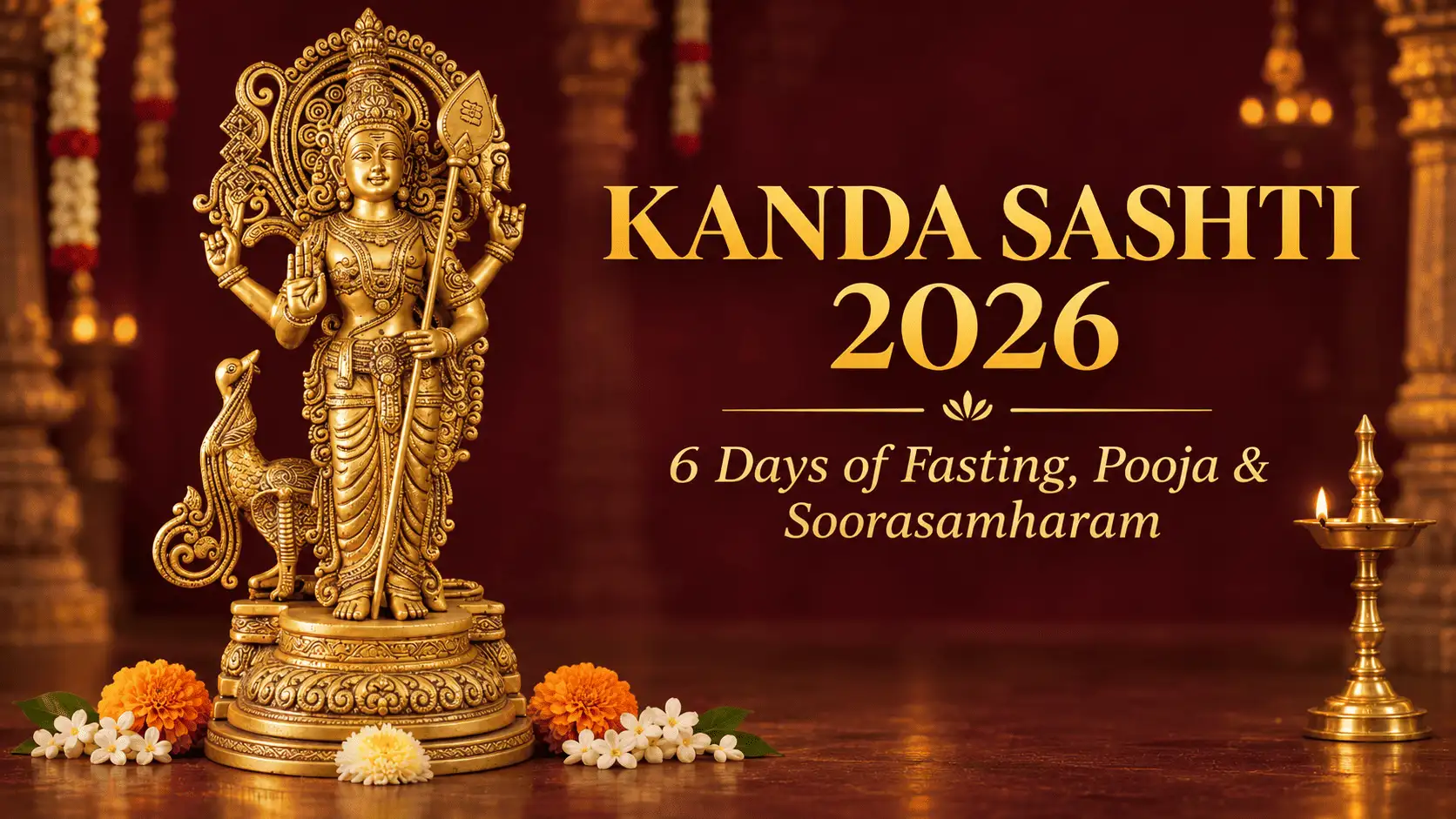
What Is Kanda Sashti?
Kanda Sashti is an important observance dedicated to Lord Murugan, also worshipped as Skanda, Subramanya and Karthikeya. “Kanda” is a Tamil form associated with Skanda, while “Sashti” refers to the sixth lunar day.
Sashti occurs during both halves of a lunar month. Monthly Murugan fasting observances commonly follow the waxing-moon Sashti. The major annual Kanda Sashti, however, brings a sustained period of worship culminating in Soorasamharam.
“Kanda Sashti” and “Skanda Sashti” are alternative names used for this devotional occasion. Spellings such as Shashti and Sasti also appear.
In Tamil Hindu practice, Kanda Sashti Viratham may involve dietary restraint, hymn recitation, temple visits and greater attention to conduct. Its purpose includes making room for prayer while practising patience, moderation and care towards others.
Why Is Kanda Sashti Celebrated?
In traditional Murugan narratives, Surapadman and the forces associated with him disturb the divine order. Murugan confronts them and restores righteousness.
Devotees understand this sacred conflict on several levels. It celebrates good overcoming evil, while also inviting reflection on arrogance, anger and ignorance within oneself.
The festival therefore offers more than remembrance of a dramatic story. It asks how courage can guide everyday choices: speaking truthfully, correcting a harmful habit or responding patiently during difficulty.
These accounts belong to religious tradition. Their devotional significance does not depend on presenting them as independently documented historical events.
The Six Days of Kanda Sashti — Meaning and Worship Traditions
The following daily themes are optional suggestions for home devotion. They are not a universally prescribed scriptural sequence or a substitute for a temple’s rituals.
Day 1 — Beginning the Observance
Prepare the pooja space and decide on a manageable routine. A personal intention might be regular prayer, gentler speech or reducing unnecessary distractions. Any dietary observance should suit your circumstances.
Day 2 — Devotion and Self-Discipline
Keep a realistic time for worship. Even a short, attentive session can establish continuity. Self-discipline can include avoiding waste, keeping commitments and being considerate towards family members.
Day 3 — Remembering Lord Murugan’s Courage
Reflect on courage expressed through responsible action. Completing a difficult duty or acknowledging a mistake can become a practical devotional focus alongside prayer.
Day 4 — Prayer and Reflection
Read, sing or listen to Murugan hymns. Families can include children through simple explanations of the festival rather than expecting lengthy recitation or restrictive fasting.
Day 5 — Preparing for Soorasamharam
Prepare flowers and offerings without overcrowding the shrine. If attending a temple, check its current announcements, travel arrangements and accessibility requirements.
Day 6 — Soorasamharam
Remember Murugan’s victory and consider what meaningful change you wish to carry forward. Home worship may be combined with attending a local observance or watching an authorised temple broadcast.
For households choosing a devotional centrepiece, Explore Traditional Brass Murugan Idols at Magizh Handicrafts.
How to Observe Kanda Sashti Fasting
Kanda Sashti fasting expresses commitment through restraint. Its form varies considerably between households, individuals and temple communities.
Some devotees eat simple vegetarian meals. Others follow a customary reduced-meal routine or avoid particular foods. Certain families also exclude onion and garlic. These practices should be understood as variations, not requirements binding every devotee.
Beginners can start with prayer, moderation and a sustainable routine. Copying another person’s strict fast without understanding their circumstances is unnecessary.
Fasting is not compulsory for everyone. Children, pregnant people, older adults and those with medical conditions should seek appropriate medical guidance before restrictive fasting.
Do not attempt dehydration or prolonged food deprivation. People taking medicines, particularly for diabetes, need individual advice; fasting can affect blood glucose, hydration and medication requirements. Do not alter prescribed treatment independently. NIDDK
If an observance makes you unwell, stop and seek appropriate help. Devotional participation can continue through prayer, hymn listening, kindness and service.
The value of viratham should not be measured by physical hardship. Its spiritual purpose is better supported by attentiveness and thoughtful conduct.
How to Perform Simple Kanda Sashti Pooja at Home
This beginner-friendly routine can be adapted to family practice. Elaborate arrangements are unnecessary.
Step 1 — Prepare the Pooja Space
Clean the area and choose a stable surface. Leave enough room for offerings, safe lamp placement and comfortable prayer. Keep the floor clear, especially where children or older family members move.
Step 2 — Place a Murugan Idol or Vel
Use your existing Murugan idol, devotional picture or securely supported Vel. A brass idol is optional.
A Palani Murugan representation, Murugan with Valli and Deivanai, or another familiar form may suit your household tradition. There is no need to replace an existing worship image for the festival.
Step 3 — Prepare Flowers and Pooja Items
Arrange available flowers, water and simple offerings. A small plate can keep the space orderly. Remove damaged flowers and keep food covered until needed.
Step 4 — Light a Traditional Lamp
A Kuthu Vilakku, Kamakshi Vilakku or another suitable pooja lamp may be used.
Place it on a heat-resistant surface, away from flowers, cloth, curtains and loose clothing. Keep children and pets clear, and never leave a flame unattended. Allow the lamp to cool before handling.
Step 5 — Offer Prayers and Devotional Hymns
Devotees may recite Kanda Sashti Kavasam, sing Thiruppugazh or offer familiar Murugan prayers.
Choose a reliable text or recording. Beginners can listen attentively or pray in their own words. Understanding a short passage can be more useful than rushing through unfamiliar material.
Step 6 — Offer Neivedyam
Offer fruit, coconut or a suitable homemade vegetarian preparation according to family custom. Keep utensils clean and prepare a quantity that can be shared without waste.
Step 7 — Conclude the Pooja Respectfully
Spend a quiet moment expressing gratitude. Follow your household’s customary conclusion and share prasadam appropriately.
Abhishekam is not required for this simple routine. Confirm material and finish suitability before applying liquids to any idol.
For an arrangement suited to your available space, Discover Brass Vel, Mayil and Traditional Pooja Lamps at Magizh Handicrafts.
What Can We Offer Lord Murugan During Kanda Sashti?
Common offerings include fresh flowers, fruits, coconut and homemade vegetarian neivedyam. Some households prepare pongal or another familiar festival dish.
Jasmine, marigold or other suitable locally available flowers can be used according to custom. One particular flower or dish is not mandatory for everyone.
Offerings also include time and attention: singing a hymn, lighting a lamp safely or sitting quietly in prayer.
Choose preparations that suit your family’s dietary needs. Keep edible offerings in clean, food-safe vessels, and share them responsibly.
Temple offerings may follow specific rules. Check before carrying food, flowers or other items to a shrine.
Soorasamharam 2026 — Story, Meaning and Significance
Soorasamharam is the climactic commemoration associated with Kanda Sashti. In 2026, it falls on 15 November for Chennai. drikpanchang.com
In a widely followed traditional account, Surapadman resists Murugan through changing forms. The narrative culminates in Murugan splitting a great tree with his Vel. The peacock and rooster emerging from the transformation become associated with Murugan’s mount and banner.
Retellings differ in detail. The enduring devotional message includes the defeat of destructive pride and the possibility of transformation through divine grace.
The Vel has a decisive role in this festival narrative. Its association with wisdom helps devotees understand the victory as an overcoming of ignorance as well as an external conflict.
At Tiruchendur, the seashore enactment gives the sacred account a public, communal form. Processional worship and the gathered congregation make it a central moment of the festival. Tiruchendur Śrī Subrahmanya Swāmi Devasthānam
For home observers, the occasion can prompt a simple question: which habit needs patient correction? The answer may be anger, dishonesty, carelessness or an unwillingness to listen.
What Happens After Soorasamharam?
At Tiruchendur, the following day brings Thirukalyanam, the celebration of Murugan’s divine marriage to Deivanai. For 2026, this is reported for Monday, 16 November. hindutamil.in
The change from sacred battle to wedding celebration brings a different devotional mood, centred on joy and auspicious union.
Other temples may follow different programmes. Families also conclude their observance according to inherited practice.
There is no single fast-breaking instruction suitable for every household. Follow appropriate family guidance, taking personal health into account, and return to meals gently rather than overeating after restriction.
Kanda Sashti Celebrations at Tiruchendur and Other Murugan Temples
Tiruchendur has a particularly close association with Soorasamharam and its coastal enactment. Its traditional festival sequence includes the sixth-day commemoration followed by Thirukalyanam. Tiruchendur Śrī Subrahmanya Swāmi Devasthānam
The six celebrated Murugan abodes, or Arupadai Veedu, are:
Tiruchendur
Palani
Thirupparankundram
Swamimalai
Thiruthani
Pazhamudircholai
Each shrine has its own sacred setting, inherited worship and festival arrangements. Their importance does not mean they conduct identical Soorasamharam events.
Before travelling, confirm the chosen temple’s current programme. Darshan arrangements, processions and access instructions may differ during major celebrations.
Devotees unable to travel can participate through nearby temples and home worship. Pilgrimage distance does not determine the sincerity of an observance.
Significance of Vel and Mayil During Kanda Sashti
The Vel is traditionally associated with divine wisdom and courage. The Mayil, or peacock, is Murugan’s familiar vahana.
Together, they help devotees recognise Murugan’s presence in devotional imagery. During Kanda Sashti, they also connect household worship with the sacred victory remembered at Soorasamharam.
A securely placed Vel or Vel-and-Mayil arrangement can provide a focus for prayer. Its devotional relevance comes from the tradition and the worshipper’s attention.
For a fuller explanation, read Lord Murugan’s Vel: Meaning, Significance & Worship Traditions. Tamil readers can also consult முருகன் வேல்: தமிழ் மரபு, ஆன்மிகம் & பண்பாடு.
Essential Pooja Items for Kanda Sashti at Home
Begin with what your household already uses. The following items can support an orderly arrangement, but they are not all compulsory purchases.
Murugan idol or picture: A familiar focus for worship.
Brass Vel: Optional where separate Vel worship follows family custom.
Vel and Mayil arrangement: An alternative devotional representation.
Brass Kuthu Vilakku: A traditional lamp where safe placement is possible.
Pooja plate: Useful for organising flowers and accessories.
Brass bell: Optional according to the worship routine.
Incense holder: Use with ventilation and consideration for respiratory sensitivities.
Flowers and offerings: Choose modest quantities that can be used respectfully.
Check dimensions, base stability and care instructions before selecting new items. A large lamp or idol needs sufficient space around it.
Magizh Handicrafts is a Chennai-based retailer of devotional idols and traditional pooja accessories.
Common Mistakes to Avoid During Kanda Sashti Preparations
Assuming everyone must follow identical fasting rules: Discuss household customs without pressuring others to match your observance.
Overlooking health: Plan meals, hydration and medication needs appropriately. Prayer remains possible without dietary restriction.
Confusing monthly Sashti with the annual festival: The major Aippasi observance includes the six-day devotional period culminating in Soorasamharam.
Following unverified dates: Use a location-specific panchangam and current temple announcements.
Crowding lamps with decorations: Flowers and fabric need safe clearance from flames.
Treating products as compulsory: Existing worship items can be entirely sufficient.
Ignoring dimensions: Measure the shelf and allow room for offerings and cleaning.
Leaving preparation until the last moment: Arrange essentials early, while buying perishable offerings close enough to remain fresh.
Frequently Asked Questions About Kanda Sashti 2026
1. When is Kanda Sashti in 2026?
The six-day observance runs from 10 to 15 November 2026 for the Chennai and Tiruchendur planning dates used here.
2. When is Soorasamharam in 2026?
Soorasamharam falls on Sunday, 15 November 2026 for Chennai. Confirm event arrangements separately with the temple you intend to visit.
3. Why is Kanda Sashti observed for six days?
The six-day period traditionally commemorates the sacred conflict culminating in Murugan’s victory over Surapadman. Devotees accompany remembrance with prayer and self-discipline.
4. How can beginners observe Kanda Sashti fasting?
Begin with a manageable devotional routine and seek guidance before dietary restriction. Simple meals and regular prayer may suit some devotees better than a strict fast.
5. Is fasting compulsory during Kanda Sashti?
No. Participation can include hymns, temple worship, personal prayer and service. Health and individual circumstances should guide any fasting decision.
6. How can I perform Kanda Sashti pooja at home?
Prepare a clean space, use a Murugan image or Vel, offer suitable flowers and food, and recite a familiar prayer. Light a lamp only where it can be supervised safely.
7. What can I offer Lord Murugan during Kanda Sashti?
Flowers, fruits, coconut and homemade vegetarian neivedyam are common choices. Follow family custom; no single offering is mandatory for everyone.
8. What is the significance of Soorasamharam?
It commemorates Murugan overcoming Surapadman. Devotionally, it expresses righteousness overcoming destructive forces and encourages reflection on ego and ignorance.
9. Can I worship a brass Murugan idol or Vel at home?
Yes. Choose secure placement and follow family practice. Brass is one suitable material, while an existing picture or other worship representation can also be used.
10. What happens after Soorasamharam?
Tiruchendur celebrates Thirukalyanam the following day, scheduled for 16 November 2026. Other temple programmes and household conclusions may differ.
Conclusion — Celebrate Kanda Sashti with Devotion and Understanding
Kanda Sashti 2026 offers six days to deepen Murugan devotion through prayer, thoughtful restraint and reflection. Soorasamharam brings the sacred victory narrative into focus, while the observance encourages patience and responsibility in everyday life.
Prepare according to your health, available time and family traditions. A modest shrine and an attentive prayer can make the occasion meaningful.
May your observance be filled with clarity, compassion and sincere devotion to Lord Murugan.