
Karthigai Deepam 2026: Significance, Home Pooja & 9 Traditional Brass Lamps
Magizh HandicraftsPublished: November 11, 202612 min read
Celebrate Karthigai Deepam 2026 on November 24 with our complete guide to its spiritual significance, Tiruvannamalai Maha Deepam, and traditional home pooja rituals. Discover 9 beautiful traditional brass lamps, including Kuthu Vilakku, Kamakshi Vilakku and Peacock Vilakku, along with lamp-lighting customs, neivedyam, decoration ideas and essential safety tips.
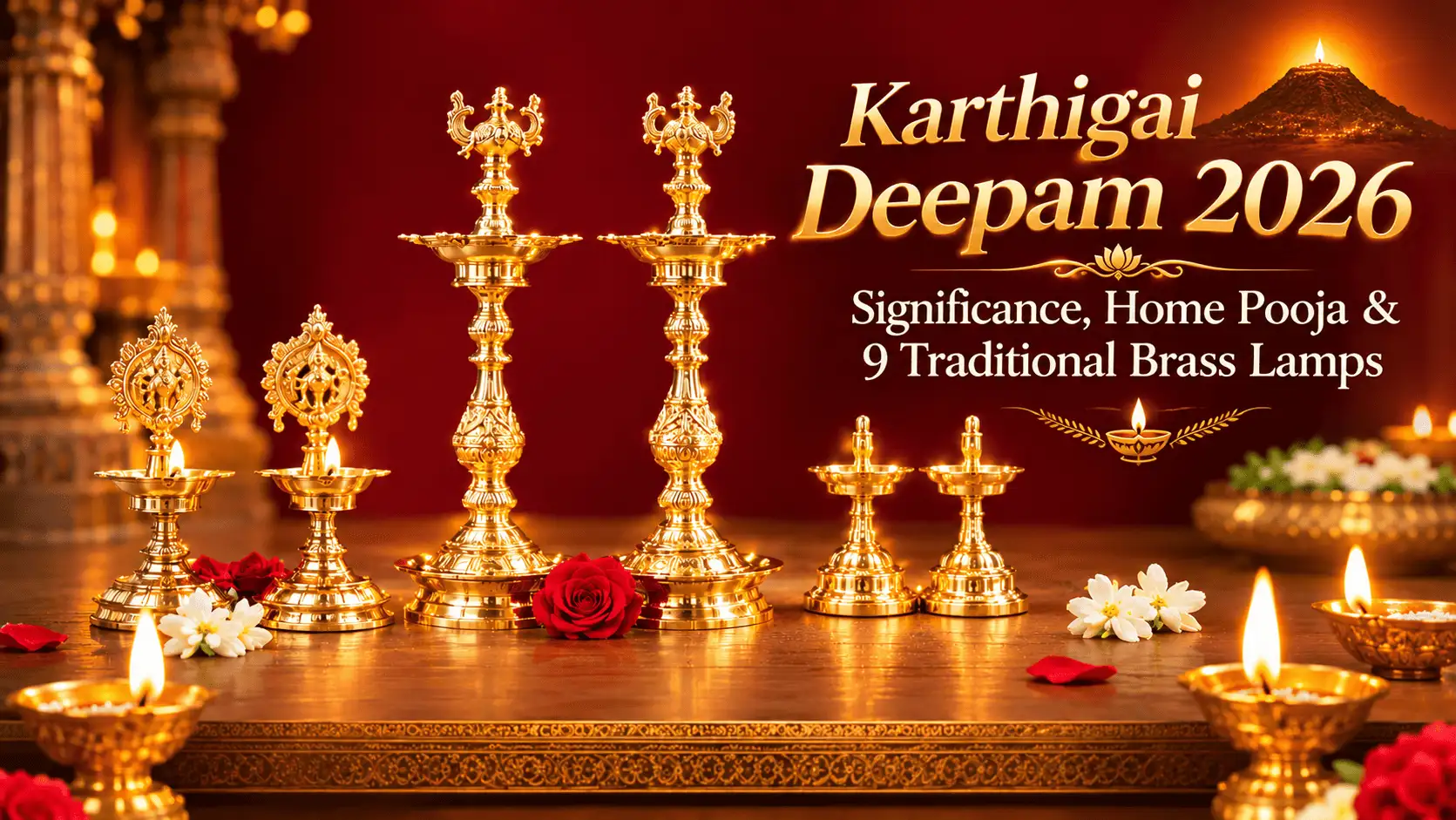
As evening approaches during the Tamil month of Karthigai, homes begin to glow with rows of gently flickering oil lamps. Doorsteps are decorated with kolam, pooja rooms are filled with flowers, and families gather to offer prayers.
Karthigai Deepam 2026 falls on Tuesday, 24 November 2026, bringing together the worship of Lord Shiva, devotion to Lord Murugan and the cherished Tamil tradition of lighting lamps.
From the sacred Maha Deepam at Tiruvannamalai to the smallest agal vilakku lit at home, the festival celebrates divine light, knowledge and devotion.
This guide explains the festival's significance, verified dates, simple home pooja steps, traditional offerings and nine types of brass lamps suitable for Karthigai Deepam celebrations.
What Is Karthigai Deepam?
Karthigai Deepam, also called Thirukarthigai Deepam, is a traditional Tamil Hindu festival of lights celebrated during the Tamil month of Karthigai, usually falling in November or December.
The annual festival is associated with the Karthigai (Krittika) nakshatra and the full-moon period.
Lighting lamps is its most recognisable custom. Families traditionally place illuminated lamps in their pooja rooms, at entrances and in other suitable locations.
The festival has special connections with Lord Shiva and Lord Murugan. It is also observed in different forms across South India, with household customs varying by region and family.
Although Karthigai nakshatra occurs every lunar month, the annual Karthigai Deepam celebration during the Tamil month of Karthigai holds particular cultural importance.
Karthigai Deepam 2026 Date and Important Timings
According to Chennai-based Tamil Panchangam calculations, Karthigai Deepam will be observed on Tuesday, 24 November 2026, corresponding to Karthigai 8 in the Tamil year Parabhava.
The Krittika nakshatra continues until approximately 11:25 PM, while Pournami tithi ends at approximately 8:23 PM, according to Drik Panchang
Why Is Karthigai Deepam Celebrated?
Karthigai Deepam represents the victory of spiritual knowledge over ignorance and the importance of divine light in Hindu worship.
Lord Shiva and the infinite flame
According to a traditional Shaivite narrative, Lord Shiva appeared as an immeasurable column of fire when Lord Brahma and Lord Vishnu sought to discover its beginning and end.
The divine flame symbolises Shiva's boundless nature, beyond ordinary human understanding.
This narrative is closely associated with the sacred Arunachala hill at Tiruvannamalai.
Lord Murugan and the Karthigai stars
Tamil Hindu tradition also connects Karthigai Deepam with Lord Murugan.
According to the traditional account, six divine infant forms of Murugan were cared for by the Krittika maidens before Goddess Parvati united them into one divine form with six faces.
This association explains the importance of the Karthigai stars in Murugan worship.
The significance of lighting lamps
A traditional oil lamp carries several symbolic meanings:
Light represents wisdom and awareness.
The flame reminds devotees of divine presence.
Lamp lighting encourages prayer and reflection.
Family celebrations preserve customs across generations.
These meanings belong to devotional tradition rather than scientifically measurable promises of prosperity or spiritual outcomes.
Tiruvannamalai Maha Deepam - Significance and Traditions
Tiruvannamalai is among the most important places associated with Karthigai Deepam.
The Arunachaleswarar Temple is dedicated to Lord Shiva, worshipped here as Arunachaleswarar or Annamalaiyar.
In Shaivite tradition, Arunachala represents the element of fire and is associated with the Pancha Bhoota Sthalams, the five sacred Shiva temples representing the elements.
Bharani Deepam
Bharani Deepam is traditionally lit inside the temple during the early morning hours of the main festival day.
It forms an important part of the temple's devotional observances.
Maha Deepam
The Maha Deepam is traditionally lit on the summit of Arunachala hill during the evening.
The great flame represents the divine light of Lord Shiva and is a central focus of devotion during the festival.
For devotees unable to travel to Tiruvannamalai, lighting lamps at home offers a meaningful way to participate in the festival's devotional spirit.
The 2026 temple programme, including exact lighting times and visitor arrangements, should be checked against official announcements.
How to Celebrate Karthigai Deepam at Home
A meaningful Karthigai Deepam pooja does not require elaborate arrangements or expensive decorations.
Families can celebrate with clean lamps, simple offerings and sincere devotion.
Step 1 - Clean and Prepare the Pooja Space
Clean the pooja room, shelves and surrounding surfaces.
Arrange the idols or pictures of Lord Shiva, Lord Murugan or the family's chosen deity.
Keep the area free from unnecessary objects and combustible materials.
Step 2 - Arrange Traditional Lamps
Place a traditional brass lamp in the pooja room and arrange smaller lamps where appropriate.
A Brass Kuthu Vilakku can serve as the main lamp, while smaller brass diyas or clay agal lamps may be used for additional decoration.
Choose stable, heat-resistant surfaces.
Step 3 - Prepare Oil, Wicks and Pooja Items
Gather cotton wicks, suitable lamp oil, flowers, a pooja plate, incense where used, and other customary items.
Sesame oil, commonly called gingelly oil or nallennai, and ghee are used in many households.
Follow your family's established practices.
Step 4 - Decorate with Flowers and Kolam
Draw a traditional kolam near the entrance.
Use jasmine, marigold or other available flowers to decorate the pooja area.
Keep flowers away from exposed flames.
Step 5 - Offer Prayers to Lord Shiva or Murugan
Families may chant familiar prayers such as Om Namah Shivaya or Om Saravanabhava.
Some devotees recite devotional hymns, including Thiruppugazh, or listen to traditional songs dedicated to Lord Shiva and Lord Murugan.
Step 6 - Prepare Neivedyam
Prepare simple vegetarian offerings according to family tradition.
Common choices include pori, aval, fruits, coconut and homemade sweets.
Offer the food respectfully before sharing it with family members.
Step 7 - Light Lamps Safely
Light the lamps during the family's customary evening pooja.
Use secure holders, keep children and pets away from flames, and never leave burning lamps unattended.
Avoid placing lamps on narrow balcony railings or near curtains.
Step 8 - Conclude the Pooja
Offer prayers of gratitude and perform the family's customary concluding rituals.
Allow lamps to extinguish safely under supervision before cleaning or storing them.
Explore Traditional Brass Pooja Lamps at Magizh Handicrafts
9 Traditional Brass Lamps for Karthigai Deepam
Traditional brass lamps are valued for their lasting appearance, practical utility and association with South Indian devotional customs.
Although clay agal lamps are especially associated with Karthigai Deepam, brass lamps are also widely used in pooja rooms and ceremonial settings.
The following nine designs offer different possibilities for worship, decoration and gifting.
The Brass Kuthu Vilakku is a traditional standing oil lamp commonly seen in South Indian homes, temples and ceremonies.
Its elevated design makes it a natural focal point in a pooja room.
Depending on the model, it may feature multiple wick positions, decorative tiers or a sculpted finial.
Choose a stable base and a height suitable for the available space. After use, clean the oil reservoir and dry the lamp thoroughly.
The Brass Kamakshi Vilakku is associated with Goddess Kamakshi and is commonly used in household worship.
Many designs feature a representation of the goddess within the lamp's decorative structure.
Its compact devotional design makes it suitable for pooja shelves and home altars.
When choosing one, examine the stability of the base, wick placement and ease of cleaning around the sculpted details.
The Brass Gajalakshmi Vilakku features imagery associated with Goddess Lakshmi, often accompanied by elephants.
It is appreciated for its traditional decorative appearance and is used in pooja rooms and festive displays.
Choose a model with clear detailing and an accessible oil-holding section.
Use a soft brush to clean ornamental areas without damaging the finish.
The Brass Pavai Vilakku is a sculptural lamp traditionally featuring a female figure holding or supporting a lamp.
Its distinctive design makes it suitable for traditional interiors, devotional displays and ceremonial decoration.
Because some models are tall or relatively heavy, confirm the overall dimensions, base stability and placement requirements before purchasing.
The Brass Peacock Vilakku features a peacock motif, sometimes incorporated into the stem, handle or decorative backplate.
The peacock has a particularly meaningful association with Lord Murugan in Tamil devotional tradition.
These lamps are suitable for Murugan pooja rooms and decorative festival arrangements.
Inspect the wick area and the accessibility of detailed sections before selecting a design.
Nachiyar Kovil is associated with traditional South Indian brass lamp craftsmanship.
Lamps identified with this regional tradition are appreciated for their distinctive forms and ornamental detailing.
Designs can vary, so buyers should examine the specific lamp rather than assuming every model follows an identical pattern.
A traditional-style lamp should not automatically be described as originating from Nachiyar Kovil unless its provenance is established.
A Brass Hanging Vilakku is designed to be suspended from a suitable ceiling fixture or dedicated support.
It can create a traditional atmosphere in a pooja area or protected interior space.
Choose a lamp with secure hanging components and sufficient clearance from walls, decorations and movement.
Professional installation may be appropriate for heavier designs. Never suspend a burning lamp from an unverified hook.
The Brass Ashtalakshmi Vilakku incorporates imagery representing the eight traditional forms of Goddess Lakshmi.
Depending on the design, the representations may appear around a lamp structure or decorative body.
It is suitable for households that appreciate Lakshmi-related devotional imagery.
Check the actual number and arrangement of figures before purchasing, since designs vary. Clean engraved areas gently.
Small brass diyas are practical for creating simple lamp arrangements.
Their compact size makes them useful for apartment pooja rooms, supervised festive displays and small ceremonial settings.
Choose lamps with broad, stable bases and accessible oil reservoirs.
Multiple small lamps should be arranged with enough separation to prevent accidental contact or tipping.
Which Brass Lamp Is Best for Karthigai Deepam at Home?
The best brass lamp depends on your space, preferred design and how you intend to use it.
For a small apartment, a compact Kamakshi Vilakku or a few small brass diyas may be convenient.
For a dedicated family pooja room, a stable Kuthu Vilakku can become the central lamp.
Larger homes may accommodate a pair of standing lamps or a carefully arranged decorative display.
For traditional gifting, consider a lamp with a manageable size, stable construction and easy maintenance.
Before buying, compare the actual dimensions, weight, oil capacity where specified, finish and cleaning requirements.
No lamp should be considered spiritually superior solely because of its price, size or ornamentation.
How Many Lamps Should We Light for Karthigai Deepam?
There is no single compulsory number of lamps followed by every Tamil Hindu household.
Some families light a few lamps in their pooja room, while others arrange many small lamps around suitable areas of the home.
Certain households follow inherited customs concerning the number or arrangement of lamps.
For modern apartments, a smaller supervised arrangement may be more practical than an elaborate display.
The emphasis should remain on devotion, family tradition and safety rather than achieving a particular count.
Which Oil and Wicks Are Traditionally Used for Karthigai Deepam?
Sesame oil and ghee are commonly used in traditional household lamp lighting.
Some families use commercially prepared pooja lamp oils according to their established practices.
Cotton wicks are widely used because they absorb oil and support a steady flame when positioned correctly.
Use oil suitable for the lamp and avoid mixing unfamiliar substances.
Never refill a burning lamp. Allow it to cool before handling, and store lamp oil away from heat sources and children.
Karthigai Deepam Neivedyam and Traditional Offerings
Food offerings form an important part of many household celebrations.
Pori, including sweet preparations such as pori urundai, is especially associated with Karthigai celebrations in many Tamil homes.
Other commonly prepared offerings include aval, fruits, coconut and traditional homemade sweets.
Some families prepare special dishes according to regional practices or recipes passed down through generations.
There is no need to prepare every possible offering.
A simple plate of fresh fruit and a traditional homemade preparation can be appropriate when it follows the household's devotional customs.
Karthigai Deepam Decoration Ideas for Modern Homes
Karthigai Deepam decorations can be beautiful without requiring extensive space or expensive accessories.
A polished brass Kuthu Vilakku can become the centrepiece of a pooja room.
A simple kolam at the entrance can add traditional character, while fresh flowers complement the devotional arrangement.
Small brass diyas may be grouped on a broad, heat-resistant tray with sufficient spacing.
A decorative brass urli can hold flowers or water as a separate display, away from burning wicks and electrical equipment.
For apartment living, keep the arrangement compact and avoid placing flames near curtains, balcony edges or crowded walkways.
How to Clean and Maintain Brass Pooja Lamps
Regular care helps brass lamps remain suitable for repeated devotional use.
First, allow the lamp to cool completely. Remove leftover oil and used wicks safely.
Wipe away residue with a soft cloth. For suitable uncoated brass surfaces, use a gentle cleaning method recommended for that finish.
Avoid harsh abrasives, particularly on lacquered, coloured, antique-finish or specially coated lamps.
Detailed engravings can be cleaned carefully with a soft brush.
After cleaning, dry the lamp thoroughly to reduce moisture-related staining.
Store lamps in a clean, dry location and protect delicate decorative elements from pressure or impact.
Common Mistakes to Avoid During Karthigai Deepam Preparations
A few practical precautions can make the celebration more comfortable and safer.
Using an incorrect festival date: Check a Chennai-specific Tamil Panchangam rather than relying on an unrelated regional calendar.
Placing lamps near flammable materials: Maintain safe distances from curtains, flowers, paper and clothing.
Leaving flames unattended: Keep a responsible adult present while lamps are burning.
Overfilling oil reservoirs: Fill lamps conservatively to prevent spills.
Using unstable displays: Select broad, level, heat-resistant surfaces.
Ignoring lamp dimensions: Check height, width and weight before purchasing.
Assuming every household follows identical rituals: Respect regional and family variations.
Treating expensive products as compulsory: Simple, meaningful worship is entirely appropriate.
Where to Buy Traditional Brass Lamps in Chennai and Online
Magizh Handicrafts is a Chennai-based retailer offering traditional brass Hindu deity idols, brass lamps, pooja accessories and decorative handicrafts.
Customers exploring Karthigai Deepam preparations can enquire about traditional designs such as Brass Kuthu Vilakku, Kamakshi Vilakku, Gajalakshmi Vilakku, Pavai Vilakku and Peacock Vilakku.
Other pooja accessories, including brass bells and pooja plates, may complement household worship arrangements.
Magizh Handicrafts serves customers through its Chennai stores in Ambattur and ECR Kottivakkam, as well as through its official online website.
Product designs, dimensions and availability should be confirmed before ordering.
Official website: www.magizhhandicrafts.com
Frequently Asked Questions About Karthigai Deepam 2026
1. When is Karthigai Deepam in 2026?
Karthigai Deepam 2026 will be celebrated on Tuesday, 24 November 2026, according to the Chennai Tamil Panchangam.
2. What is the significance of Karthigai Deepam?
The festival symbolises divine light, spiritual knowledge and devotion, with traditional associations to Lord Shiva and Lord Murugan.
3. Why are lamps lit during Karthigai Deepam?
Lamps symbolise the removal of darkness and ignorance through knowledge and divine grace in Hindu devotional tradition.
4. How can I celebrate Karthigai Deepam at home?
Clean your pooja space, prepare lamps and simple offerings, decorate with kolam and flowers, and offer prayers according to family custom.
5. Which brass lamp is best for Karthigai Deepam?
A stable Brass Kuthu Vilakku is a popular choice for a main pooja lamp, while Kamakshi Vilakku and small brass diyas suit compact spaces.
6. How many lamps should be lit for Karthigai Deepam?
There is no universal compulsory count. Families can follow their traditional practices while considering available space and fire safety.
7. What oil is traditionally used for Karthigai Deepam?
Sesame oil and ghee are commonly used. Other practices vary according to household tradition.
8. What is Tiruvannamalai Maha Deepam?
It is the sacred flame traditionally lit on Arunachala hill during the Karthigai Deepam festival, symbolising Lord Shiva's divine light.
9. What neivedyam is prepared for Karthigai Deepam?
Pori, pori urundai, aval, fruits, coconut and traditional homemade sweets are among the offerings prepared in different households.
10. Where can I buy traditional brass lamps in Chennai?
Magizh Handicrafts offers brass lamps and pooja accessories through its Ambattur and ECR Kottivakkam stores and official online website. Confirm individual product availability before purchasing.
Conclusion - Celebrate Karthigai Deepam with Light and Devotion
Karthigai Deepam 2026 is an opportunity to honour Tamil devotional traditions, remember the sacred light of Arunachala and celebrate the connection between family worship and spiritual reflection.
Whether you light a single traditional brass lamp or arrange several small diyas, the celebration can remain simple and meaningful.
Choose lamps that suit your home, follow your family's customs and give proper attention to fire safety.
May the divine light of Karthigai Deepam bring peace, wisdom and happiness to your home.