
Pamba River: Sacred Significance, Pamba Snanam & Sabarimala Pilgrimage
Magizh HandicraftsPublished: November 29, 202613 min read
The Pamba River holds a sacred place in the Sabarimala pilgrimage and in the traditional story of Lord Ayyappan as Manikandan. Discover the meaning of Pamba Snanam, why devotees pray at Pamba Ganapathy Temple, and how pilgrims can honour the river while preparing for the climb to Sannidhanam.
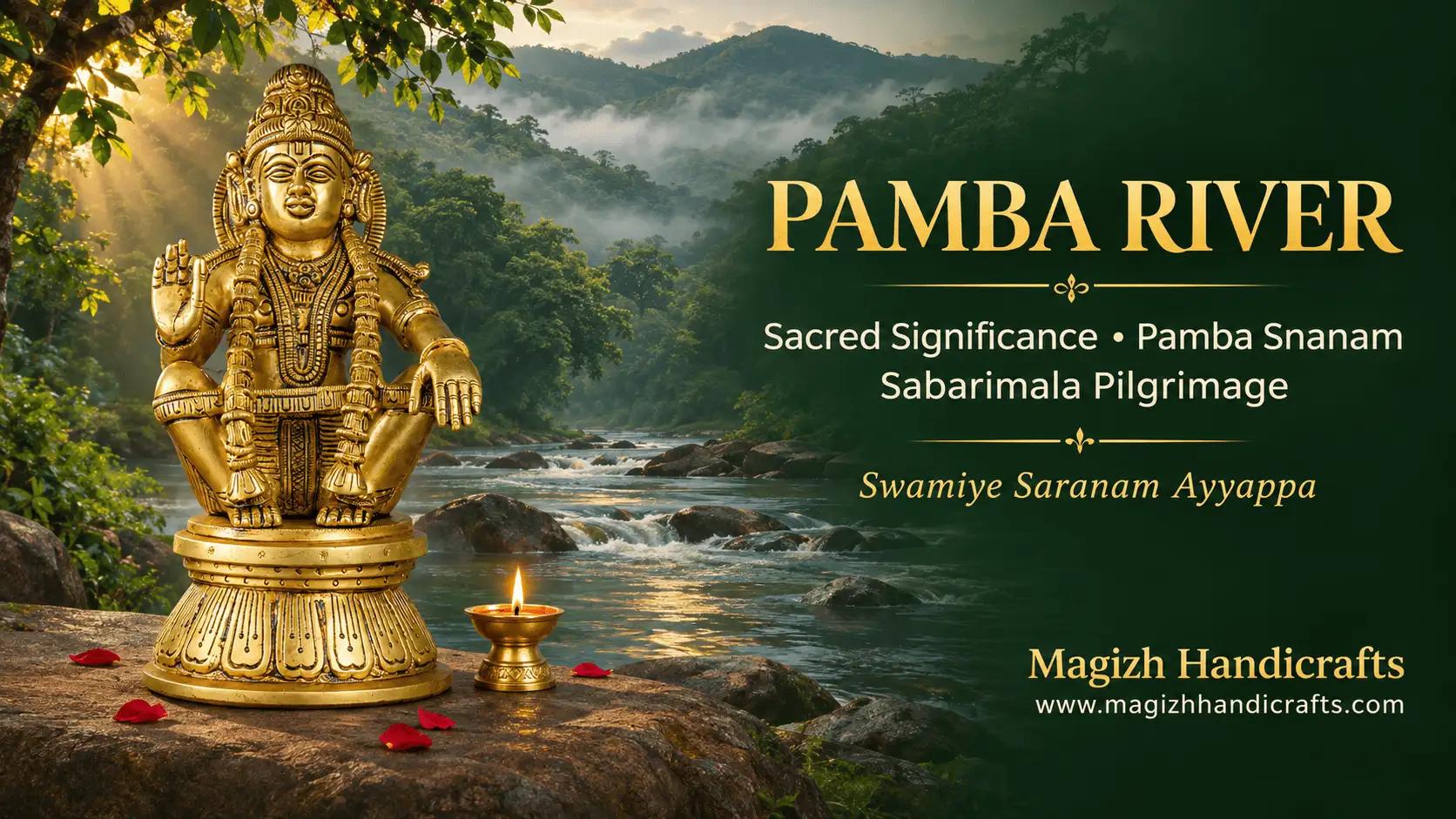
When Sabarimala pilgrims reach the Pamba River, many pause before beginning the climb to Lord Ayyappan’s shrine. Some pray at the riverbank. Others prepare for Pamba Snanam, the traditional ritual bath, or make their way to Pamba Ganapathy Temple. After the travel and preparations that bring them this far, the pause offers time to gather their thoughts and remember why they have come.
Pamba is sacred to devotees because of its place in the story of Manikandan and in the living traditions of the Sabarimala pilgrimage. For first-time pilgrims, knowing what happens here can make it easier to join in respectfully, understand the choices available and prepare for the ascent.
What Is the Pamba River?
The Pamba River, also spelled Pampa, is a west-flowing river in Kerala. It rises at Pulachimala, also written Pulachimalai, on the Peermade plateau of the Western Ghats in Idukki district. Kerala’s irrigation department puts its length at about 176 km, making it the state’s third-longest river. The river passes through Pathanamthitta district, including the Ranni region, and flows through parts of Alappuzha and the Kuttanad lowlands before reaching Vembanad Lake. Kerala Irrigation Department river-basin profile · Alappuzha district river overview
The pilgrimage site at Pamba is one point along this much larger river system. Downstream, the river provides irrigation water for Kuttanad’s rice fields and feeds the Vembanad backwaters through several branches. Its waters support local communities and river and wetland habitats. Those connections help explain why care for the river at the pilgrimage base matters well beyond the bathing ghats.
Why Is the Pamba River Considered Sacred?
Pamba is revered for its association with Lord Ayyappan and for the prayers and observances generations of pilgrims have performed along its banks. In Hindu tradition, a ritual bath in a sacred river can express purification and readiness for worship. At Pamba, that meaning is closely tied to the desire to approach Ayyappan with humility as devotees begin the climb to his shrine. Kerala Tourism’s guide to the sacred Pamba
A pilgrim who has kept the Ayyappan Viratham may spend weeks working on patience, restraint and daily prayer. A moment at the river offers an opportunity to renew that commitment. The meaning devotees give to the water is spiritual and is expressed through prayer, remembrance and the conduct they carry into the rest of the journey.
The Connection Between the Pamba River and Lord Ayyappan
In a widely told devotional account, King Rajasekaran of Pandalam finds an infant on the banks of the Pamba. The child, Manikandan, is taken into the royal household and raised there. Devotees know Manikandan as Lord Ayyappan. Details and spellings vary across retellings, but the image of the king finding the child by the river remains central to Pamba’s place in the story. Kerala Tourism’s account of Pamba and Manikandan
This tradition gives the riverbank a personal meaning for pilgrims. A place associated with Ayyappan’s childhood is also a place where his devotees prepare to visit his shrine. The wider story and the observances associated with it are covered in our Lord Ayyappan guide to the 41-day Viratham and home pooja.
Discover traditional brass Lord Ayyappan idols at Magizh Handicrafts for your home pooja space.
Why Is Pamba Called Dakshina Ganga?
Dakshina Ganga means “Ganga of the South”. Devotees use the honorific for Pamba because its waters have a sacred role in pilgrimage and ritual bathing. Kerala sources also record the name Dakshina Bhagirathi. Such titles draw on the reverence many Hindus hold for the Ganga, and similar honorifics are used for other sacred rivers. Geographically, the Pamba belongs to Kerala’s west-flowing river system and drains into Vembanad Lake. Kerala Department of Economics and Statistics, Pamba Irrigation Project
What Is Pamba Snanam?
Pamba Snanam is the traditional ritual bath that many Sabarimala pilgrims take in the Pamba River before continuing to Sannidhanam. Snanam means bathing. In this setting, the bath is accompanied by prayer and is understood as a form of symbolic purification before darshan. The practice depends on the pilgrim’s circumstances, family or group tradition, and whether authorities permit entry into the water. Kerala Tourism’s account of Pamba
Why Do Ayyappan Devotees Bathe in the Pamba River?
Spiritual purification and preparation for darshan
For devotees who observe it, Pamba Snanam gives physical form to a prayer for inner cleansing. It also provides a moment to leave travel concerns aside and focus attention on Lord Ayyappan. The same intention can guide a quiet prayer from a permitted place on the bank when a bath is unsuitable.
An important stage of the pilgrimage
Reaching Pamba marks the end of one part of the journey and the beginning of the ascent. A group may use the pause to gather, settle its belongings and pray together before climbing. For a first-time pilgrim, the pause also offers time to ask about the path and the group’s customs.
Devotion, surrender and shared customs
Several generations of a family may have learnt the practice from elders or a Guruswamy, an experienced devotional guide. The shared observance can help a newcomer understand the meaning of saranam, or taking refuge in Ayyappan, through the conduct of fellow pilgrims.
How Is Pamba Snanam Traditionally Performed?
A devotee may begin by offering a short prayer to Ayyappan. When officials permit access and the conditions suit the pilgrim, the bath takes place at a designated, open ghat. Some devotees chant “Swamiye Saranam Ayyappa” and change into clean clothes before continuing. A Guruswamy or family elder may guide the order of prayer and other observances.
Follow instructions from police, rescue personnel and temple authorities. Stay out of the river when access is closed, water levels are high or currents are strong. Keep away from deep or unfamiliar stretches, including places where the bottom is hard to judge. An open ghat can still have slippery steps, so pay attention to where you stand and leave room for other pilgrims to pass. Official Sabarimala advisories
If you have health or mobility concerns, or are unsure about conditions, offer a prayer from a permitted area on land and continue when ready. When unsure about local permission, ask on-site staff before approaching the water. Carry any change of clothes away with you.
Pamba Ganapathy Temple Before the Sabarimala Climb
Pamba Ganapathy Temple is dedicated to Lord Ganesha. Many pilgrims stop here to pray for a safe journey before beginning the ascent to Sannidhanam. The custom reflects the wider Hindu practice of invoking Ganesha at the beginning of an undertaking and seeking his help in overcoming obstacles. Kerala Tourism’s illustrated Sabarimala guide
Coconut is a customary offering. Follow the temple’s arrangements for making an offering, especially when the queue is busy. Some devotees simply bow or recite a brief prayer. Both the stop at Ganapathy Temple and the prayer at the river give pilgrims a moment to prepare before the steeper part of the journey. Kerala High Court record describing the temple and its customary offering
Traditional Rituals and Offerings at Pamba
Pamba Bali
Some devotees perform rites of remembrance for their ancestors at Pamba. You may hear these observances called Pamba Bali or referred to as pitru tarpanam, depending on the rite and local usage. These are family or ancestral observances. Families intending to take part can ask about the appropriate place and procedure locally. National Tiger Conservation Authority report on Pamba pilgrimage observances
Pamba Vilakku
Pamba Vilakku is a ceremonial lighting of lamps associated with the pilgrimage season. Kerala Tourism describes the observance at Pamba Triveni around the time of evening worship at Sabarimala. Follow authorised arrangements and keep private lamps, oil and ritual materials out of the water. Kerala Tourism’s Pamba Vilakku guide
Pamba Sadya
A sadya is a feast. Pamba Sadya is a communal meal linked to particular pilgrimage groups and customs, including devotees who arrive by the traditional forest route for the Makaravilakku period. For those groups, sharing a meal at Pamba before climbing Neelimala is part of the pilgrimage tradition. Kerala Tourism’s Pamba Sadya guide
The Spiritual Journey from Pamba to Sabarimala
Pamba is a major base for the uphill walk to Sannidhanam, the precinct of Lord Ayyappan’s shrine. Neelimala and Appachimedu are landmarks on the traditional ascent. Pilgrims often chant “Swamiye Saranam Ayyappa” along the way. Start at a comfortable pace, leave space between groups and follow the route that officials have opened. Official Sabarimala route guide
Many pilgrims travel under the guidance of a Guruswamy and carry the Irumudi Kettu, the two-compartment bundle prepared for the pilgrimage. It holds offerings such as a ghee-filled coconut for the deity, along with items for the journey. Temple tradition links carrying the Irumudi to climbing the Pathinettampadi, the eighteen sacred steps at Sannidhanam. Follow temple directions for access to the shrine. Official Sabarimala rituals and traditions
What Should First-Time Sabarimala Pilgrims Know About Pamba?
Check official announcements before leaving home for current access, darshan, transport and crowd arrangements. Agree on a meeting point with your group in case you become separated. Carry only what you can manage on an uphill walk, including drinking water and any personal medicines you need. Drink from designated supplies and use marked rest areas so the walking route stays clear.
Give yourself time to rest before starting the climb. Follow any health advice you have received, and ask staff for help if you feel unwell. An experienced pilgrim can explain the group’s devotional customs, while on-site staff can clarify access, queues and river conditions. Follow the authorities’ instructions near barricades and on crowded steps. Official Sabarimala health and pilgrimage updates
Pamba River During Mandala Pooja and Makaravilakku
Many devotees undertake a traditional 41-day Mandala Viratham, a period of devotional discipline that may include daily prayer and changes in routine. Mandala Pooja marks the culmination of the Mandala observances at the shrine. Makaravilakku is a later festival associated with Makara Sankranti and is a major occasion in the annual pilgrimage season. Pathanamthitta district’s Sabarimala overview · Official Sabarimala rituals and traditions
During this period, devotees from Kerala, Tamil Nadu and other states pass through Pamba. The riverbank, temple approach and ascent can all become busy. Leave time for queues, keep entrances and paths clear, and check official announcements close to your travel date.
Why Protecting the Pamba River Is a Sacred Responsibility
A used garment left in the water, a plastic wrapper dropped at the ghat or oil poured in after a prayer can travel downstream. Pamba supplies communities and feeds wetlands, so pollution affects people and habitats beyond the pilgrimage base. Heavy seasonal use makes careful disposal especially important. Official Sabarimala notice on waste disposal
Carry used clothes and belongings away from the ghats.
Keep soap, shampoo and detergent out of the river.
Use designated facilities for plastic, food scraps and other waste.
Keep oil, wicks, flowers and ritual materials out of the water. Ask staff where offerings should go.
Stay on permitted paths, respect protected forest areas and follow instructions about single-use plastics.
Planning a bag for wet clothes and avoiding unnecessary packaging can make it easier to follow these practices. Keeping the riverbank clean is a form of care that every pilgrim can share, whether they take a ritual bath or pray on land.
What Can Devotees Learn from the Sacred Pamba River?
The time between arriving at Pamba and beginning the climb offers everyday opportunities to practise the values of the pilgrimage. Waiting patiently for space at the ghat, helping someone regroup with their companions and leaving the bank clean all ask for attention to people and places beyond oneself.
At Pamba, devotees from different regions share the same riverbank and turn towards the same shrine. Simplicity shows in the belongings they carry, self-discipline in the care they take on the path, and humility in the way they make room for others. These are habits a devotee can continue at home.
How to Worship Lord Ayyappan at Home
Families who cannot travel to Sabarimala can set aside time for Ayyappan worship at home. Follow your household tradition and choose a routine you can keep with care.
Prepare the space. Clean the pooja shelf or a stable table and set aside room for prayer.
Place an image of Ayyappan. Use a picture or idol you already have and place it securely at a height where you can comfortably offer flowers.
Light a lamp if customary. Set it on a stable, heat-resistant surface, away from fabric and within an adult’s supervision.
Offer flowers or neivedyam. Choose a simple offering such as fruit, according to your family custom.
Chant “Swamiye Saranam Ayyappa”. Say the prayer quietly or together as a family.
Read or listen. Spend a few minutes with an Ayyappan story, hymn or devotional teaching.
Close with gratitude. End with a prayer for your family and others, and put away the pooja items safely.
Create an Ayyappan pooja space with brass idols, lamps and devotional accessories from Magizh Handicrafts.
Traditional Ayyappan Pooja Essentials for Devotees
Seated brass Ayyappan idols are available in compact styles for smaller shelves and in designs framed by a Thiruvachi, or decorative arch. A Ganesha idol may sit alongside Ayyappan if that suits the household’s practice. For lamp worship, a small brass diya suits a compact surface, while a freestanding Kuthu Vilakku needs a broad, stable spot. Traditional brass lamps for home pooja
A pooja plate can hold flowers and offerings. A bell, sambrani holder or devotional mala, including a Rudraksha mala where customary, can serve a familiar place in a family’s worship. Choose according to the space and your existing practice. For pilgrimage observances, follow your Guruswamy and the temple’s instructions.
Where to Buy Brass Ayyappan Idols and Pooja Essentials in Chennai
Magizh Handicrafts is a Chennai retailer of brass Hindu deity idols, including Ayyappan and Ganesha, traditional lamps, devotional malas and pooja accessories. Its stores are in Ambattur and ECR Kottivakkam. The collections are also listed on the Magizh Handicrafts website.
Frequently Asked Questions About the Pamba River
1. Why is the Pamba River considered sacred?
Devotees associate its banks with Manikandan, the childhood form of Lord Ayyappan. It is also a place of prayer and traditional ritual bathing before the climb to Sabarimala.
2. Where does the Pamba River originate?
It rises at Pulachimala on the Peermade plateau of the Western Ghats, in Kerala’s Idukki district.
3. What is the connection between the Pamba River and Lord Ayyappan?
In devotional tradition, the king of Pandalam found the infant Manikandan near the river and raised him in the royal household.
4. Why is Pamba River called Dakshina Ganga?
The title means “Ganga of the South” and reflects the river’s sacred place in pilgrimage and ritual bathing.
5. What is Pamba Snanam?
It is the traditional ritual bath that many devotees take at Pamba while preparing for Sabarimala darshan.
6. Is bathing in Pamba River compulsory before visiting Sabarimala?
It is a traditional observance. Pilgrims who cannot bathe, or who encounter restricted access, can offer a prayer on land and continue according to local instructions.
7. Is it safe to bathe in the Pamba River?
Conditions and permissions can change. Enter only at a designated ghat when authorities allow it and conditions suit you. Stay out during strong currents, high water or closures.
8. What is the significance of Pamba Ganapathy Temple?
Pilgrims pray to Lord Ganesha there before the ascent, traditionally asking for help in overcoming obstacles and for a safe journey.
9. How far is Sabarimala Temple from Pamba River?
Kerala Tourism and the district administration give about 5 km from Pamba to Sabarimala as a general reference. Follow the marked route and reckon with the uphill sections and crowd flow. Kerala Tourism route overview
10. Can I worship Lord Ayyappan at home without visiting Sabarimala?
Yes. A clean place for prayer, your usual household offerings and the chant “Swamiye Saranam Ayyappa” are enough for a simple home observance.
Conclusion
The Pamba River links Kerala’s Western Ghats and backwaters and holds a place in the devotional life of Sabarimala. At its banks, devotees remember Manikandan, prepare for darshan through Pamba Snanam or prayer, and seek Ganesha’s blessings before the climb. Whether you are walking to Sannidhanam or praying at home, the values of patience, humility and care for others can guide your worship. At Pamba River, start by leaving the river and its banks clean for the people who come after you.
Swamiye Saranam Ayyappa!
Explore traditional brass Ayyappan idols, devotional malas and pooja essentials at Magizh Handicrafts.